
WHAT PARK HOLIDAYS OWNERS TOLD US
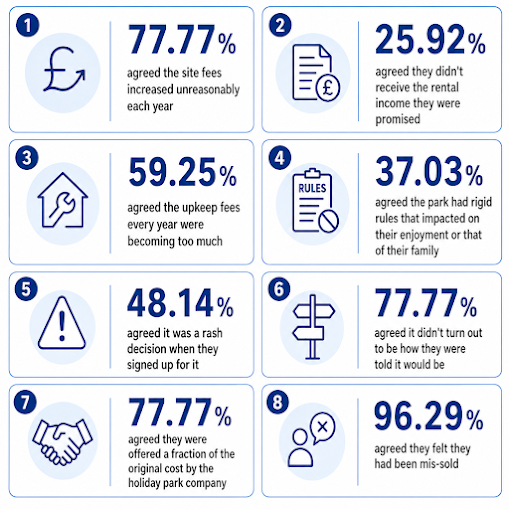
If you were mis-sold a static caravan or holiday lodge, or you’ve lost money to unclear fees, resale problems, hidden charges, upgrade pressure or unfair contract terms – find out where you stand.
Over 1,800 cases for holiday park home owners are currently being processed!
Start your free, no obligation assessment by filling out the short contact form…
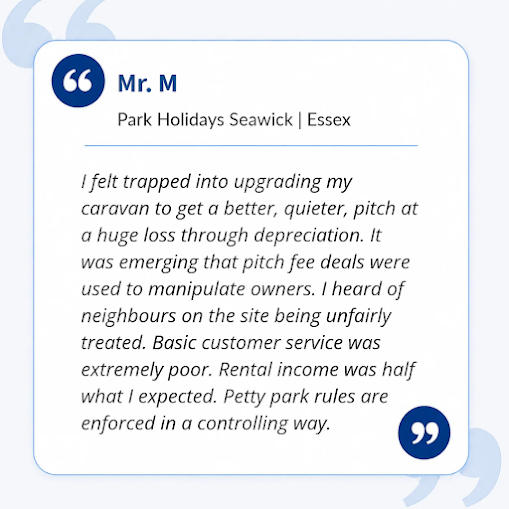
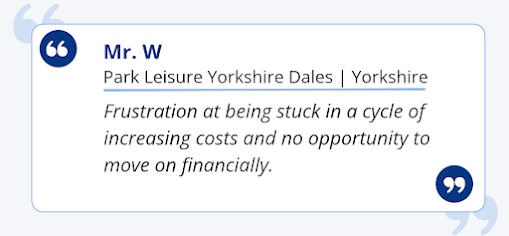
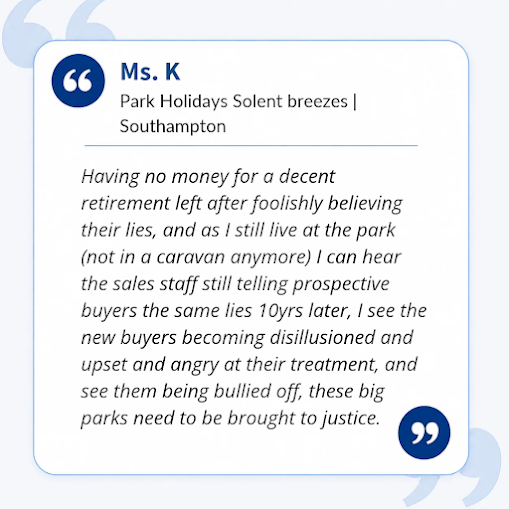
Park Holidays UK operates a large and changing portfolio
As of July 2026, Park Holidays UK promotes holiday-home ownership across more than 50 parks and refers to a community of more than 15,000 owners.
Its current locations include Seawick, Harts, New Beach, Marlie, Chichester Lakeside, Carlton Meres, Pevensey Bay, Rye Harbour, Sandhills, Felixstowe Beach, Suffolk Sands, Silver Sands and many others across England, Scotland and Wales.
Park Holidays UK Limited is an active company registered in England under company number 02434151. Current Park Holidays material also states that associated Park Leisure names are trading names of Park Holidays UK Limited.
The group acquired nine Bridge Leisure parks in 2021. That history means older documents may use Park Leisure, Bridge Leisure, a park company or another name. Owners should retain every agreement and later variation rather than rely only on the current brand.
Were temporary pitch-fee offers explained as temporary?
Park Holidays UK currently promotes selected holiday homes with free introductory pitch fees and fixed fees for later years. Its current running-cost guidance also states that pitch fees vary according to the park, facilities, size of the holiday home and selected pitch.
A promotion may reduce initial costs, but it should not obscure the normal ownership commitment.
The circumstances may deserve closer assessment where:
- A free-fee period was treated as if it reflected the long-term cost.
- The fee after the promotion was not disclosed.
- A fixed-fee offer applied only to selected parks or models and this was not clear.
- Other running costs or add-ons were omitted.
- The buyer was pressured to commit before receiving the complete offer terms.
Keep the original advertisement, quotation, purchase agreement, pitch-fee offer and later statements.
Was a long season presented as permanent residential use?
Park Holidays UK states that holiday homes cannot be used as a main residence, even where a park is open all year. Individual park seasons vary. Current park pages show examples ranging from shorter seasonal openings to approximately 11.5 or 12 months.
A possible mis-selling concern may arise where the buyer was told that they could:
- Live at the park permanently.
- Use the holiday home as their only or main residence.
- Treat an 11.5- or 12-month season as residential permission.
- Ignore the holiday-use conditions in the agreement.
- Use the park address in a way that was inconsistent with holiday ownership.
The exact park opening dates and pitch agreement matter. A general description of “year-round visits” should not be treated as a substitute for the written terms.
Did part exchange, relocation or resale sound easier than it proved?
Park Holidays UK currently promotes part exchange and selected “bring on” arrangements for moving an existing holiday home to participating parks. Current terms show that eligibility and included costs can be limited.
A potential claim concern may arise where the buyer relied on a statement that:
- Park Holidays UK would provide a favourable future buyback.
- Part exchange would protect a particular level of value.
- The caravan could be moved to another park without significant cost.
- The owner could leave whenever they wished on straightforward terms.
- An upgrade would always provide a practical route out of ownership.
A current promotion does not establish what an earlier buyer was promised. The original sales explanation should be compared with the agreement and later offers.
Keep valuations, part-exchange quotations, bring-on terms, private-sale guidance and correspondence about removal or deductions.
Did an older brand or acquisition affect what you understood?
Park Holidays UK’s portfolio has grown through acquisitions. A buyer may have purchased when the park used a Park Leisure, Bridge Leisure or other identity.
A brand change does not by itself vary a contract or establish a claim. It may be relevant where:
- The company named in later correspondence differs from the purchase agreement.
- A later policy was applied to an older agreement.
- A park-specific promise was replaced by a wider group rule.
- The owner was not told that terms or benefits could change after acquisition.
- The party making a later decision was not clearly identified.
Keep the old brochure, purchase agreement, every variation and later Park Holidays UK correspondence in date order.
Owners with documents specifically branded Park Leisure may also need the separate Park Leisure page.
Was a long season presented as permanent residential use?
Park Holidays UK states that holiday homes cannot be used as a main residence, even where a park is open all year. Individual park seasons vary. Current park pages show examples ranging from shorter seasonal openings to approximately 11.5 or 12 months.
A possible mis-selling concern may arise where the buyer was told that they could:
- Live at the park permanently.
- Use the holiday home as their only or main residence.
- Treat an 11.5- or 12-month season as residential permission.
- Ignore the holiday-use conditions in the agreement.
- Use the park address in a way that was inconsistent with holiday ownership.
The exact park opening dates and pitch agreement matter. A general description of “year-round visits” should not be treated as a substitute for the written terms.
Other long-term Park Holidays UK ownership concerns
Were ownership length and upgrade expectations clear?
The right to keep a holiday home on a Park Holidays UK pitch depends on the licence and park terms applying to that purchase. Current offers, park pages and upgrade promotions should not be assumed to define an older owner’s rights.
The circumstances may need assessment where:
- A specific ownership period was promised.
- The buyer was not told how age or condition affected the pitch.
- Renewal or extension was presented as automatic.
- An upgrade was later treated as unavoidable.
- A later group policy appeared inconsistent with the original agreement.
The issue is whether the original sales explanation was accurate and whether a different later position caused loss.
When might a Park Holidays UK ownership problem support a claim?
The circumstances may be worth assessing where:
- A statement about fees, season length, resale, value or ownership duration materially influenced the purchase.
- A promotion was presented without its main limitations.
- Important charges or restrictions were omitted.
- A long park season was presented as permanent residence.
- The owner suffered measurable loss after relying on the information provided.
Not every change, fee increase or low resale offer will support a claim. Each case depends on its evidence and history.
Which Park Holidays UK documents may help?
Keep:
- The purchase agreement and sales order.
- The pitch licence and park rules.
- Documents using older Park Leisure, Bridge Leisure or park-company names.
- Later Park Holidays UK variations and notices.
- Site-fee promotions and full offer terms.
- Annual pitch-fee and running-cost statements.
- Sales brochures, advertisements and saved webpages.
- Emails, messages and notes of sales conversations.
- A timeline showing brand, operator and policy changes.
FAQ
How many ownership parks does Park Holidays UK currently operate?
As of July 2026, Park Holidays UK promotes ownership across more than 50 parks. The exact portfolio can change as parks are acquired or sold.
Why do my documents mention Park Leisure or Bridge Leisure?
Park Holidays UK has grown through acquisitions, and current material identifies associated Park Leisure trading names. Keep the older and newer documents together.
Does a park open all year allow permanent residence?
No automatic residential right follows from a long season. Park Holidays UK states that holiday homes cannot be used as an only or main residence.
Can a free pitch-fee offer support a claim?
The offer itself is not a problem. It may become relevant where its duration, eligible park, later fee or other important conditions were presented inaccurately.
What if I was told I could move my caravan to another Park Holidays park?
Current bring-on arrangements are subject to participating parks and specific terms. A historic representation should be compared with the written agreement and later response.
Can a poor part-exchange offer support a claim?
Not by itself. It may matter where a clear future-value or easy-exit statement materially influenced the purchase.
Can a group policy override an older park agreement?
That depends on the original contract and any valid variation. Retain the purchase agreement and every later policy notice.
Start your claim assessment enquiry
Complete the form below and tell Holiday Park Advice Centre what happened with your holiday park ownership. If you were misled, charged unexpected fees, pressured to upgrade or blocked from selling your holiday caravan or lodge, Holiday Park Advice Centre can help you understand whether your situation may be relevant to a potential claim.