
You buy a static caravan or lodge for a particular type of break: quiet weekends, familiar facilities, known neighbours and a park atmosphere that feels worth the annual cost. The problem starts when the park later proposes a major shift in use, and owners are told to see it as a planning matter rather than a holiday park contract issue.
That distinction matters. A council may decide whether a development can go ahead, but owners still need to understand how the proposal sits with their licence agreement, site rules, sales information, pitch-fee position and any promises made when they bought.
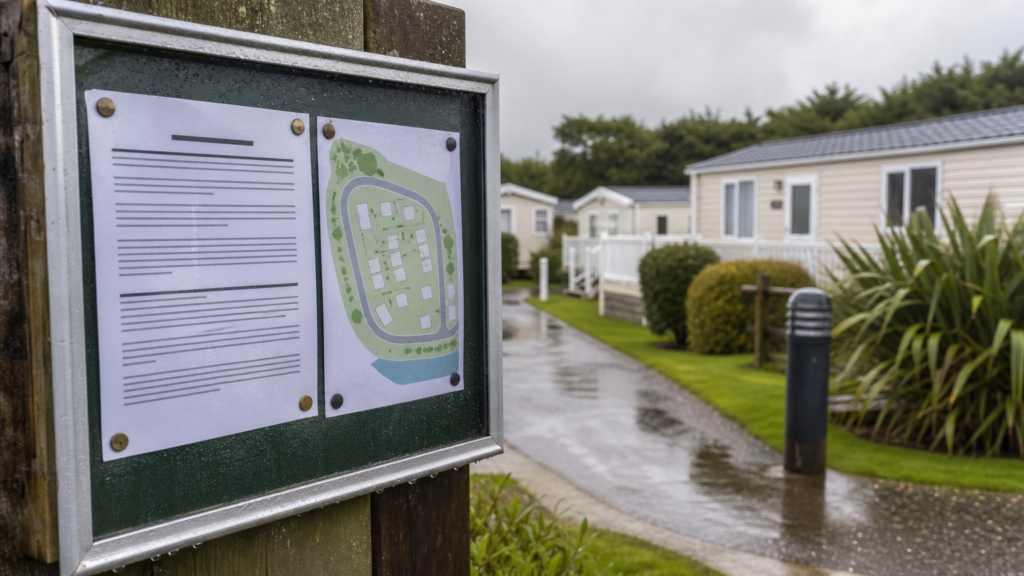
The current dispute at Cakes and Ale Holiday Park in Leiston, Suffolk, shows why a site-use change can quickly become more than a planning file.
When can a planning change affect your holiday park contract?
Yahoo News UK reported on 21 August 2026 that owners at Cakes and Ale Holiday Park feared the site’s “peaceful” character would be affected by plans linked to accommodation for Sizewell C workers. The report described concerns about worker accommodation for up to 670 people and the effect that could have on the existing holiday setting.
Planning-data records for Cakes and Ale Caravan Park show a full application, reference DC/26/1229/FUL, relating to proposed reconfiguration and temporary worker accommodation use. A related EIA screening record, DC/26/2943/EIA, was received and validated on 26 August 2026, according to the Plota planning-data mirror.
For an owner, two questions sit side by side:
- Can the park obtain planning approval for the proposed use?
- Does the change fit with the licence, site rules, sales information and owner communications?
Those questions overlap, but they are not the same. The planning process is not designed to resolve every private dispute between a park operator and a caravan or lodge owner.
Why the Cakes and Ale dispute matters beyond Suffolk
The Cakes and Ale story is not only about one local application. East Suffolk Council has also consulted on a Draft Major Energy Projects Workers’ Accommodation Planning Position Statement, published through its consultation portal on 22 January 2026.
That wider context shows how major infrastructure projects can create demand for temporary accommodation near existing communities and holiday settings. For owners, a significant change can arrive after they have paid pitch fees, upgraded a unit, planned family use around the season, or started thinking about resale.
A typical owner question is simple: “If I bought into a quiet holiday park, can the operator now introduce a very different use pattern?” The answer depends on the wording of the agreement, the site rules, the sales trail and what the park has said since.
Strong owner evidence often comes from the material closest to the sale and the later change: the licence agreement, current site rules, brochures or website pages used at sale, emails from the sales process, pitch-fee notices, facility descriptions, meeting notes and operator updates about the proposal.
Match the proposed change against what you were sold
Start with the original expectation. Was the park described as a quiet retreat, a family holiday base, an owners-only environment, a luxury lodge setting or a seasonal leisure site? Were specific facilities, access routes or surroundings part of the reason you bought?
Then put that alongside the proposed change. A small layout adjustment is different from a move that brings a new population onto the park, changes traffic flows, restricts leisure facilities or alters the atmosphere owners pay for.
Owners are usually in a stronger position when they focus on specific mismatches, such as:
- a facility promoted as part of the owner experience being removed, restricted or repurposed;
- the park’s use pattern moving away from holiday occupation towards regular worker accommodation;
- pitch locations, access routes, parking or shared amenities being materially affected;
- site rules changing without a clear explanation of how the licence allows it.
Dated material can make the difference between a general complaint and a focused owner issue. A saved brochure, a screenshot of advertised facilities or an email confirming how the park was intended to operate is more useful than saying the park simply “feels different”.

Fees, resale and site rules: where the financial impact appears
A major change can affect more than enjoyment. Owners may question whether their pitch fee still reflects the same amenity value, whether a resale will be harder, or whether new rules will limit how and when the caravan or lodge can be used.
If a pitch-fee increase arrives while a significant site change is being proposed, compare the increase notice with the operator’s explanation for the change. Where facilities are reduced or the site becomes less attractive to holiday buyers, it is reasonable to ask how that fits with the fee being charged.
Resale is another pressure point. A buyer may ask about the planning application, future site character and any change to shared facilities. If the operator controls sales approval, commission, transfer conditions or advertising routes, uncertainty over site use can affect the owner’s exit options.
Site rules also matter because they show how the park says it is meant to operate. Clauses on occupation, visitors, access, quiet enjoyment, parking, subletting and use of facilities can help owners test whether the proposed change fits the stated model.
If the operator says the rules allow the change, ask where that authority appears in the agreement and how owners were told about it.
Before you accept “it’s just planning”, get your position clear
You do not have to wait for a final planning decision before understanding your own position. If a proposed change affects the character, facilities, use pattern or resale value of your holiday caravan or lodge, deal with the owner-side issues while emails, notices and application references are still easy to trace.
Keep the key material in one place: your licence agreement, site rules, sales emails, pitch-fee notices, facility information, operator letters and any planning reference numbers. Then compare what is being proposed with what you were sold and what you have been charged for.
If you are facing a major park change and are unsure how it fits with your agreement, Holiday Park Advice Centre can help you look at the owner-side issues before you accept the operator’s explanation.
Request holiday park advice if you want help understanding your holiday park contract, pitch-fee position, site-rule concerns or resale impact.